Introduction
Chess is one of the most popular and important games in the world. “Approximately 605 million adults worldwide play chess regularly” (Dennys, 2012), and its influence on the world can be seen everywhere, from pop culture to political history. It can officially be traced back to 5th century India (Matthew, 2009), and has evolved much over the centuries of playing.
I have been playing Chess ever since I was a child, and have been playing it intermittently since then, keeping up to date with the game’s culture online, and even competing in local competitions with my secondary school. Thus, it is a game that I hold very close to my heart.
Therefore, for this assignment, I recorded my games of Chess every day from February to April, and rated the experiences that came with playing each one. I will outline my methodology for recording the data necessary for the project, visualise this journey, analyse my findings, and reflect on the effect of this ritual on my day to day livelihood.
Methodology
For this project, I played five games of ‘Blitz’ Chess every day. “Blitz chess (more commonly known as speed chess) simply refers to a game of chess that has a fast time control.” (“Blitz Chess – Chess Terms,” n.d.) For this endeavour, I chose to play five minute games. This means that both myself and my opponent had a total of five minutes each to play our moves. There were six ways that a chess game ended from the games that I played: checkmate, resignation, timeout, stalemate, abandonment, and agreement. I played on the Chess app or the website of the same name owned by Chess.com.
In order to record my data, I created a report form that would be filled with information about each game and then my overall experience for the day.
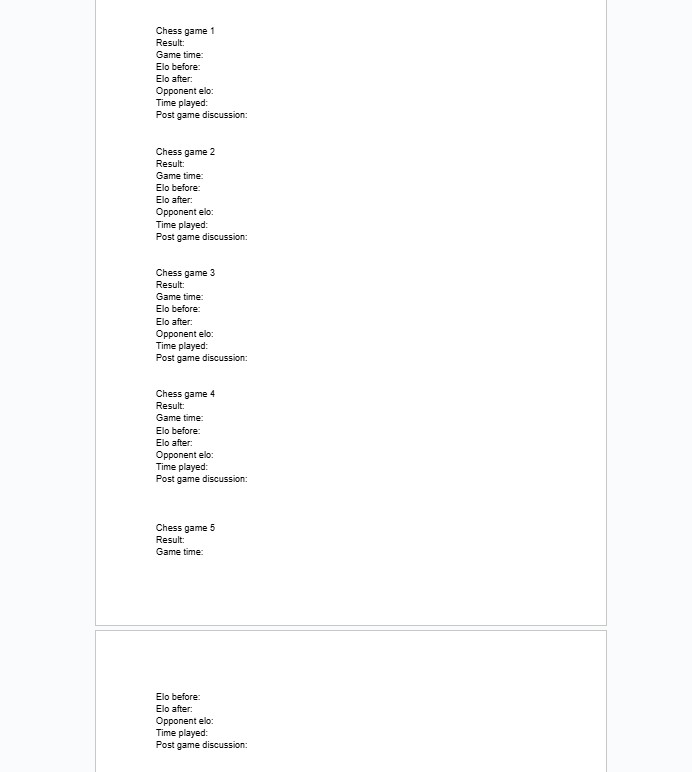
Figure 1. Template of the Report Forms for the Chess games.
‘ELO’ refers to the relative rating that a player has on Chess.com. “Each player’s Elo rating is represented by a number that reflects that person’s results in previous rated games. (“Elo Rating System – Chess Terms,” n.d.) A win or loss usually increases or decreases a player’s ELO by 4-16, depending on the opponent’s ELO and other factors.
At the end of the document, I had a 1-5 rating system of all the games played based on how I felt playing them and a discussion section for general reflection. Finally, I created a Google Sheets sheet that collected and aggregated the data for visualisation and analysis.
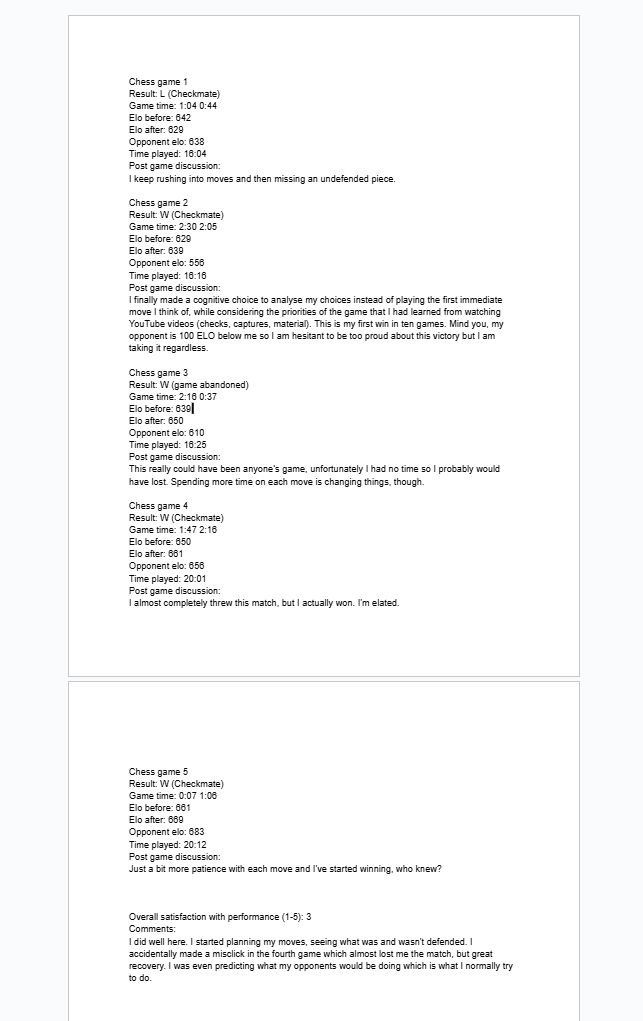
Figure 2. Sample Report Form.
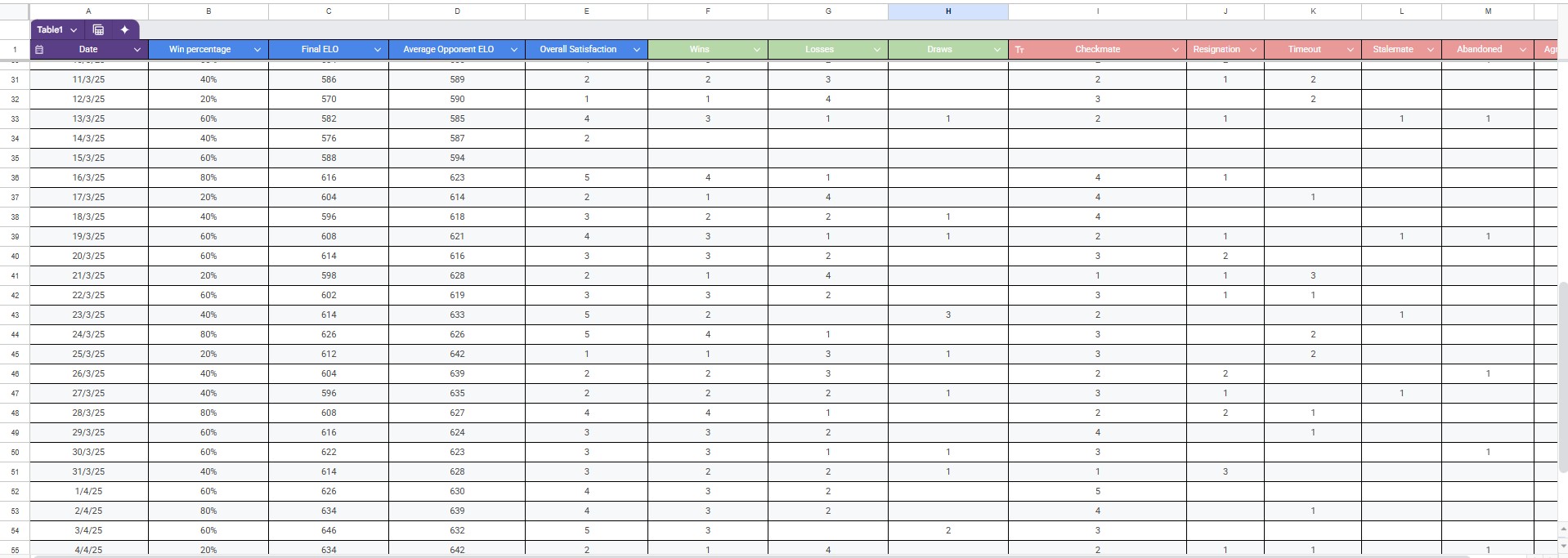
Figure 3: Table of Collected Data.
Analysis
The following tables and graphs were generated using Google Colab.
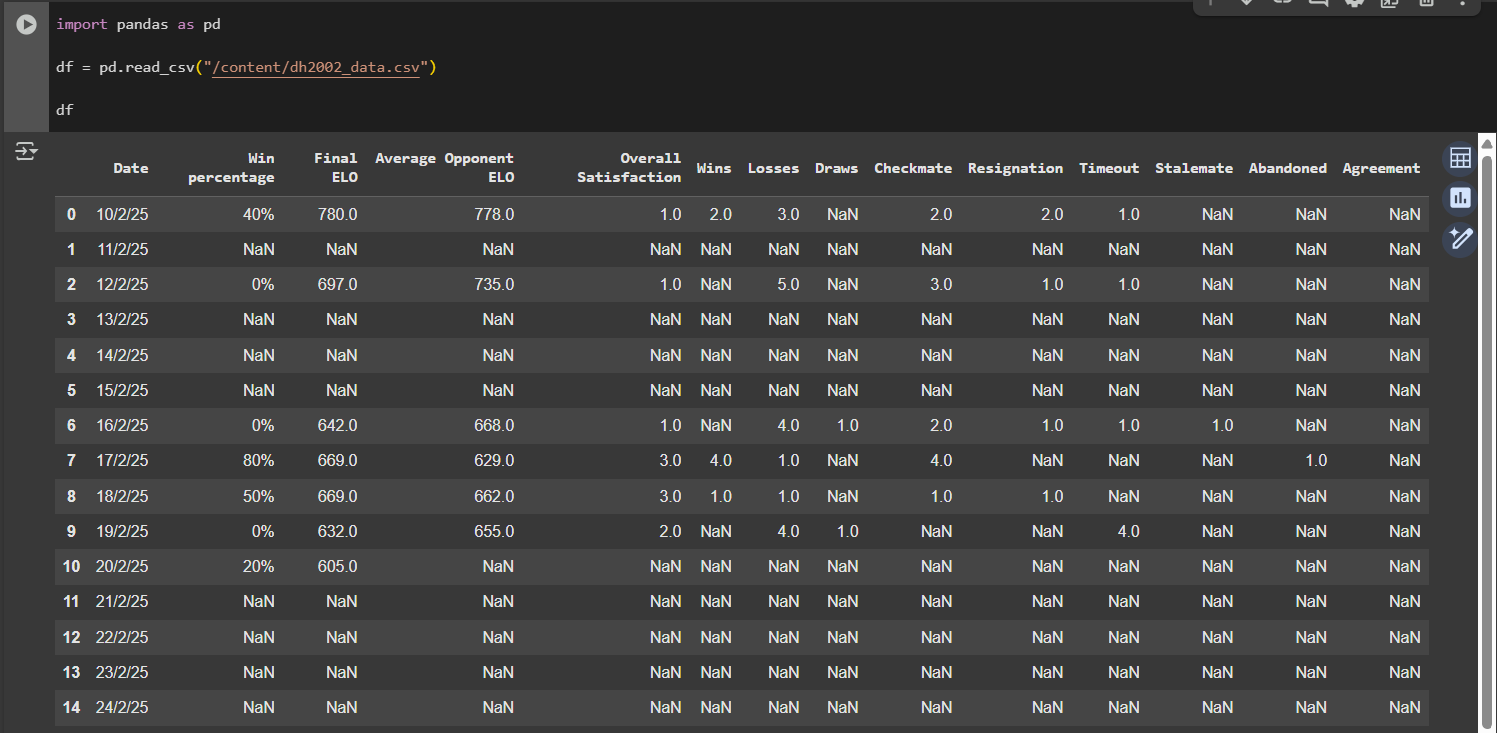
Figure 4: Loaded Dataset on Google Colab
The first thing that I wanted to investigate was my overall daily win percentage. I played for around 58 days, meaning approximately 290 games of Chess. If you are thinking, “wow, that is a lot of games”, please consider that I am already aware of this, as I had to play all of them.
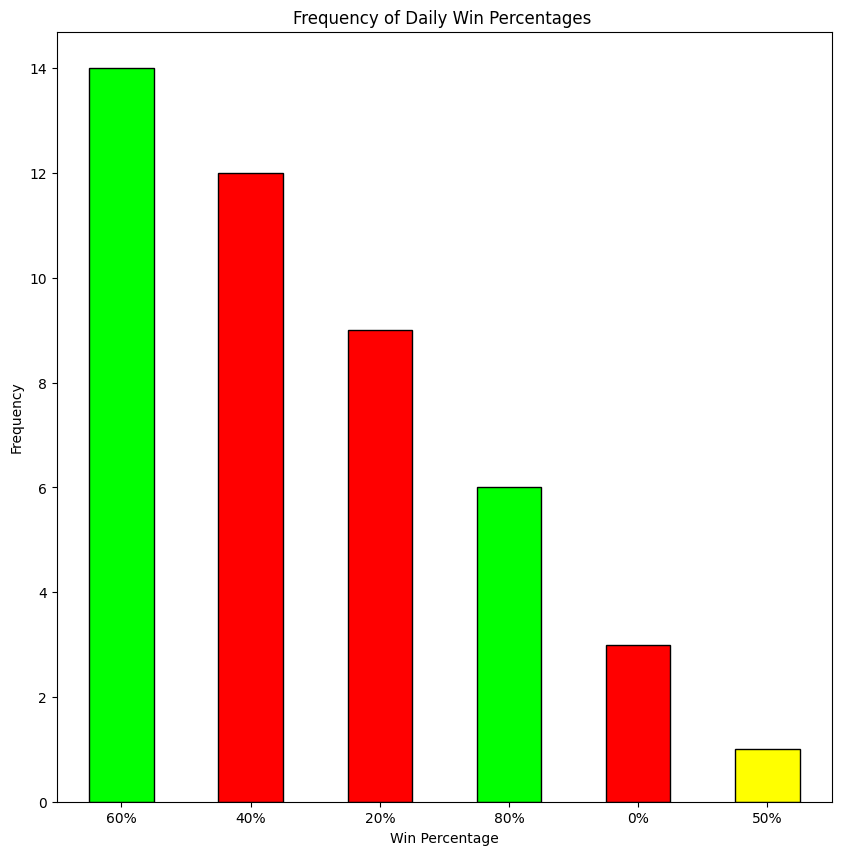
Figure 5.
The most common occurrence every day was that I would win three of my five games, followed closely by winning ⅖ of them. The bars where I won more than I lost are represented in green, and vice versa in red. There was an exception shown by the yellow bar, stemming from the one day I only played two games and won once.
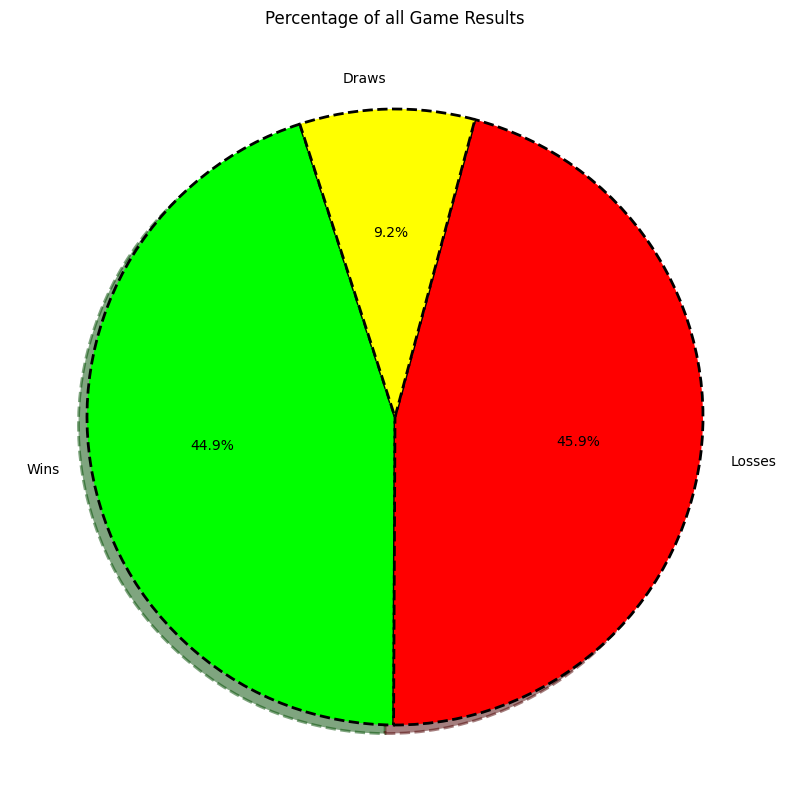
Figure 6.
Unfortunately, I did lose more games than I won. However, as we will see from my ELO rating progression, this demonstrates that my wins gave me more rating than my losses, implying that on average, I was winning against better players and my losses were against close competitors.
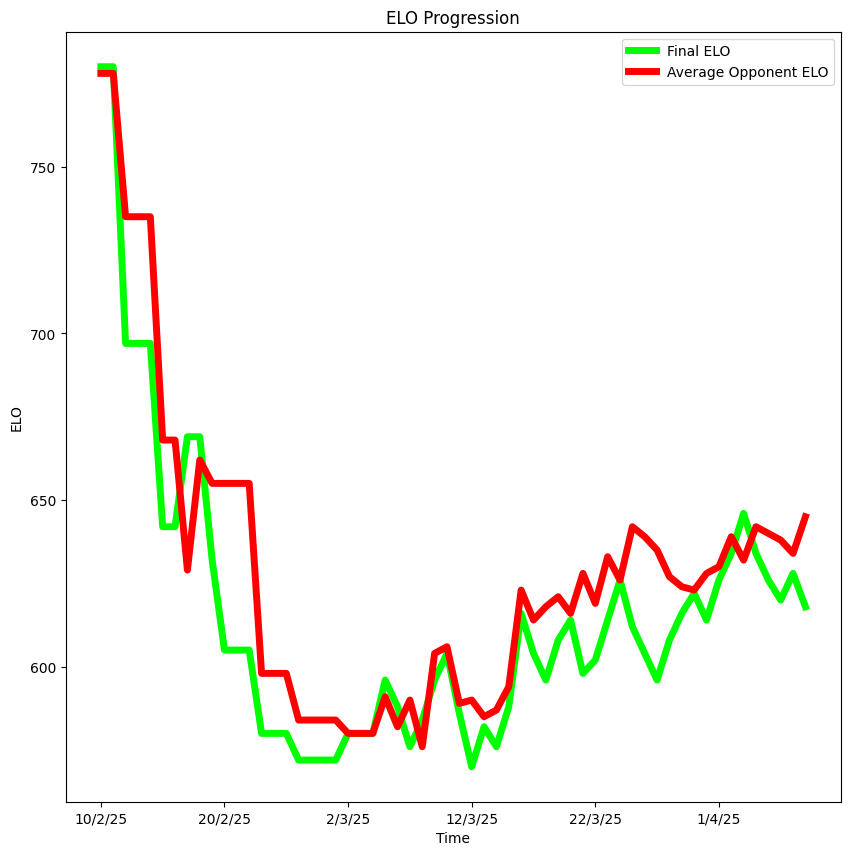
Figure 7.
The process of gaining ELO was quite cyclical. When I was winning, my opponents would quickly become stronger and humble me, so my ELO would drop, meaning my opponents would become weaker, meaning I started beating them again, and so on.
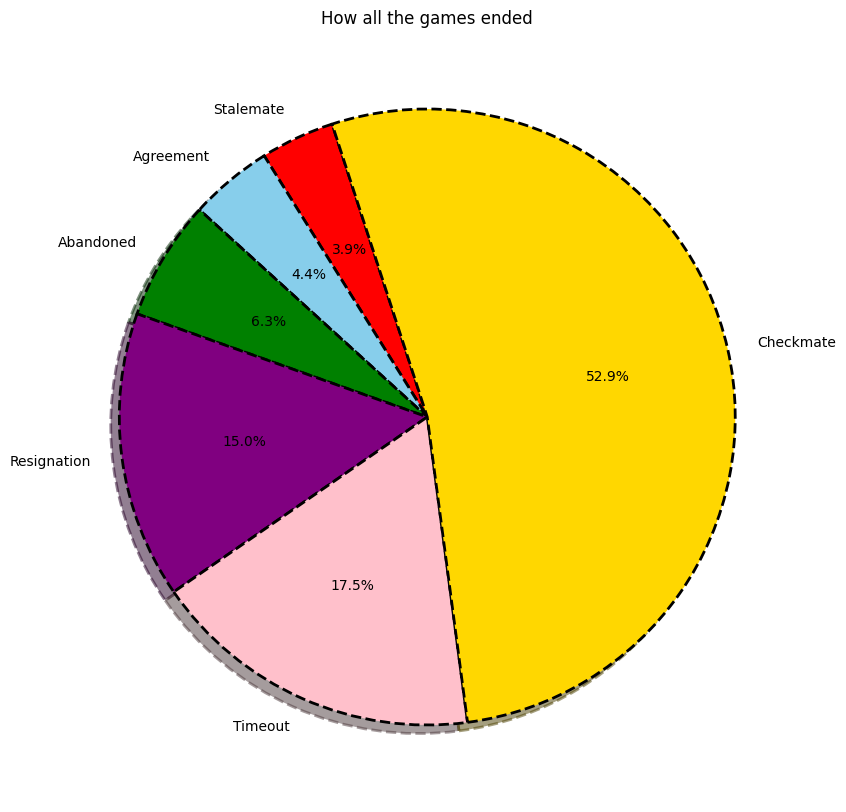
Figure 8.
Over half of the games ended in a checkmate, which makes sense as that is the default way a game ends in Chess. The next highest ending was a timeout, which was mainly due to my own losses, as time was a big issue for me early on. I personally hate resigning, but many of my opponents were more than happy to call it quits when defeat was inevitable. A symptom of low level chess is that most players don’t even consider attempting a draw, which is demonstrated by the two rarest endings.
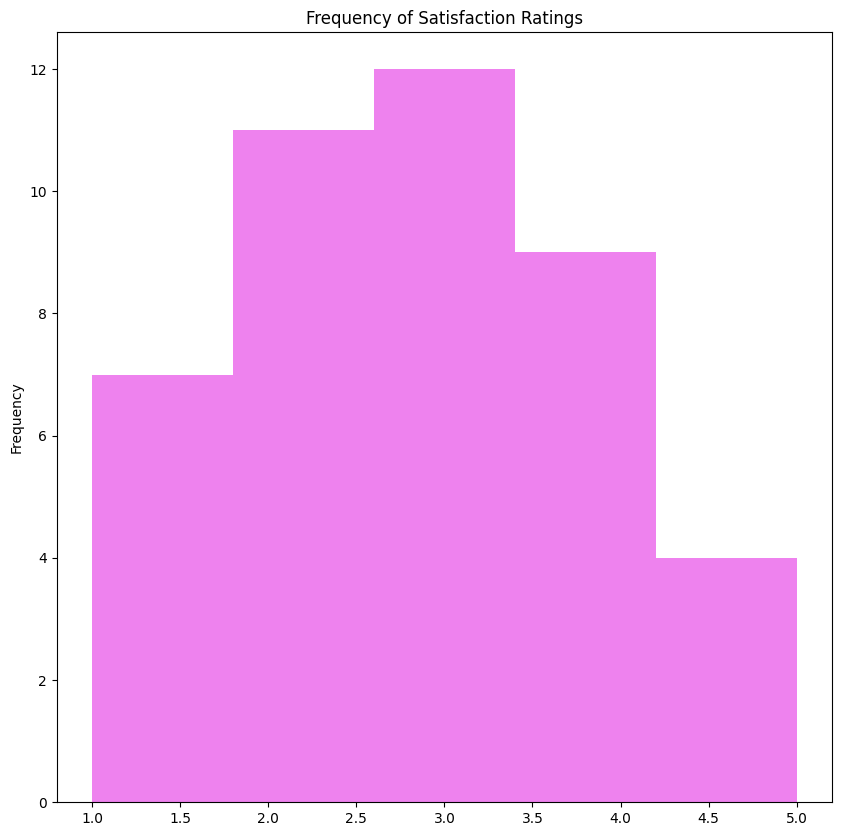
Figure 9.
This graph visualises the frequency of satisfaction ratings for each day. However, due to the subjective nature of this rating system, it is necessary to conduct the ‘post game discussions’ and ‘comments’ from the daily reports alongside it, to get a clearer picture of my overall satisfaction.
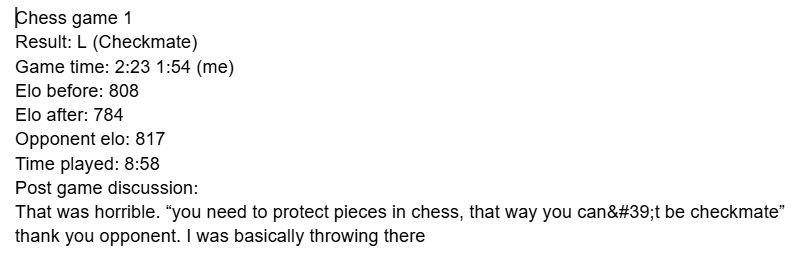
Figure 10.
Not only did I start this whole project on a loss, but I was then insulted by my very first opponent. What a promising start.

Figure 11.
Suffice to say, it was a shaky start, and my confidence continued to plummet. However, it is interesting to note that I was initially incredibly disappointed by only having two wins, once again demonstrating my level of expectation for my apparent skill. This disappointment soon curdled into apathy, as I soon learned that I was not as good as previously thought.

Figure 12.
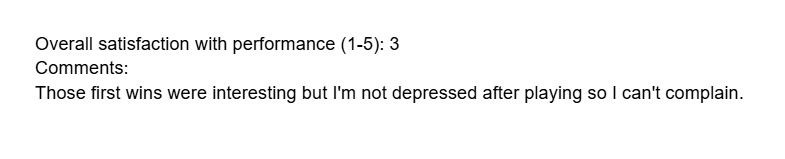
Figure 13.
Most of the days felt like this, with my performance in a limbo, basically not improving or losing/gaining much ELO. However, individual games could be wildly different from each other. The example below shows that games definitely had the potential to be very fun and engaging, but also incredibly frustrating and dull.
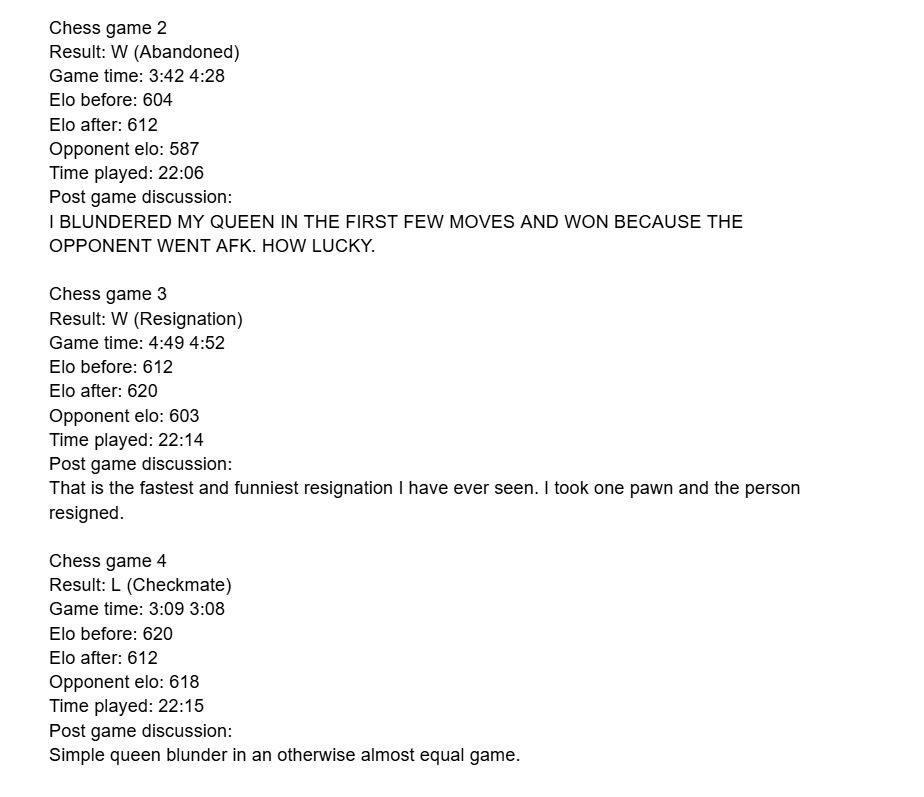
Figure 14.
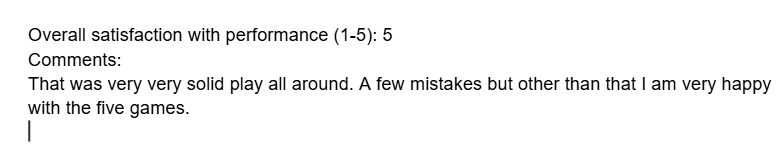
Figure 15.
This was my first ‘5’ rating, and the comment did not reflect my overall pride and hope. I was over the moon to finally have some victory in my vault, especially with how incredibly rare a ‘5’ was.
Discussion
To begin, it should be known that I am not very good at Chess. At all, actually.
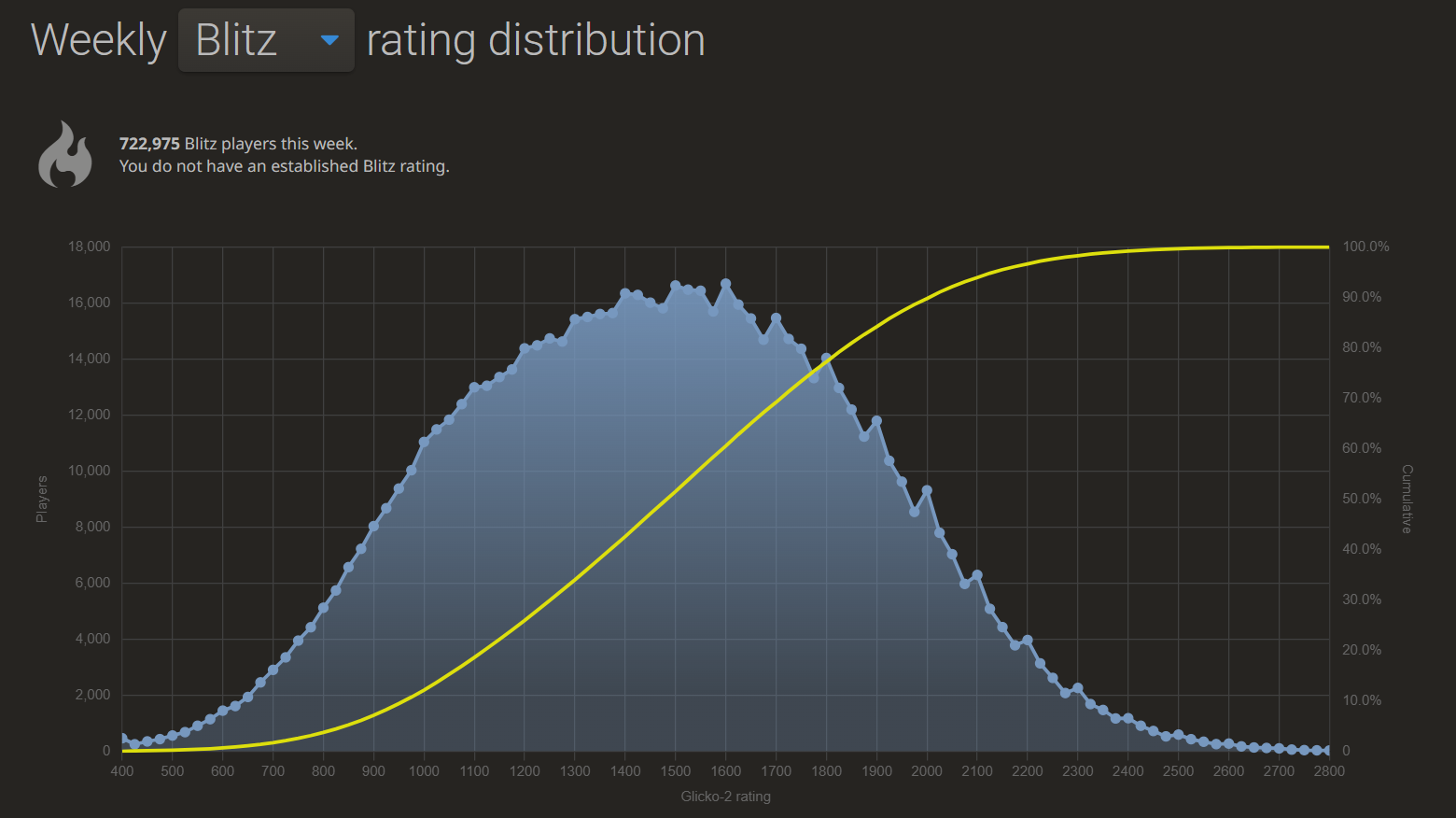
Figure 16: Weekly Blitz Rating Distribution (“Weekly Blitz Rating Distribution • Lichess.org,” n.d.)
I am not even close to the average ELO of a Chess.com player. I played almost 300 games, I should have improved at least somewhat. So, what went wrong?
Here is the thing about Chess: it is ruthless. It is incredibly difficult to improve without dedicating a significant amount of time and effort into actively playing and studying the game. I simply did not have the consistency to sit down and review all of my played games to correct my mistakes.
It did not help that I was usually playing in the evening or at night, after a long day of work and/or classes. Early into this mission, playing became less about enjoying and improving and more about filling a quota and doing assignment work. This spawned complacency and frustration in me. I just wanted to finish the work so that I could go back to doing what I wanted to.
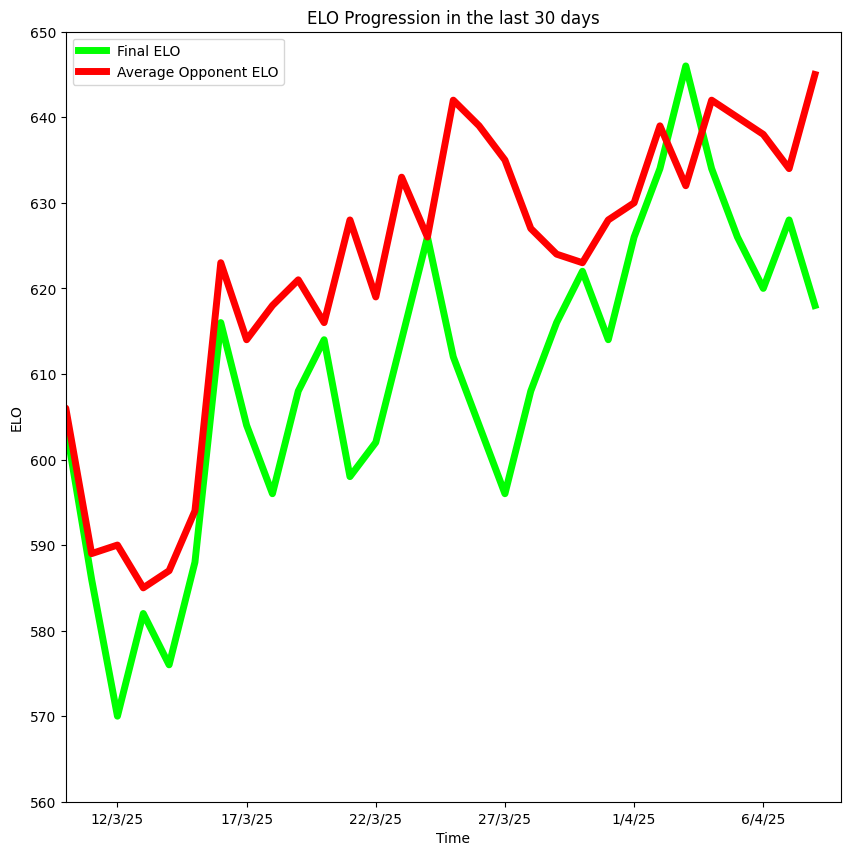
Figure 17.
The path out of my despair began when I had made the decision to start consuming as much Chess content as I possibly could. I started watching YouTubers like GothamChess during meals and before going to bed, and destroying all of my algorithms for Instagram and Tiktok by scrolling through ‘millions’ of videos of guides, games, and memes, trying to absorb as much information as I possibly could.
Did I lose sleep? Yes. Was I daydreaming about openings, and forks and pins, and all of the ways I could ‘en passant’ someone? Yes. Was that daydreaming during lectures? I plead the fifth. But did my gameplay improve?
Kind of. I began climbing, slowly. Chess isn’t a game where you can just immediately improve just by watching a few videos. It takes an unfathomable amount of time and discipline. It requires continuous investment, and possibly sacrificing your soul to a higher being. As I did not have the time or soul to give, improving more than the small increments that I did was simply not a possibility.
If I had to alter the design of my project, I would focus less on trying to play as much as possible and concentrate more on the core principles of the game. Therefore, I would change the daily games to three a day, meaning that I am playing, but not so much that I feel depressed afterwards, and then spend about ten minutes going back and studying the games played. I would also try and record more data on the kinds of games I had. Nothing too in-depth, just which openings I played, whether I won more games as white or black, and whether I had many games with ‘great’ moves, as prescribed by the app’s review system.
Conclusion
Overall, I found this experience to be enlightening, for both my personal life and also for my relationship with Chess. I found collecting the data to be well executed by me, if not repetitive and tiring. I had slight challenges with being consistent with playing, and identifying trends in the data, but verily enjoyed visualising it and creating the relevant graphs. As bittersweet as the narrative for this endeavour was, it was personal and I found myself enjoying the process overall, despite the various difficulties. I will still play Chess, even if I am utterly hopeless at it, because you don’t have to be good at something to enjoy it. It certainly helps, though.
References
- Matthew. 2009. “History of Chess: The Basics.” Chess.com. Chess.com. January 28, 2009. https://www.chess.com/article/view/the-history-of-chess.
- Dennys, Harriet. n.d. “Chess Redux AGON Releases New Chess Player Statistics from YouGov.”
- “Blitz Chess – Chess Terms.” n.d. Chess.com. https://www.chess.com/terms/blitz-chess.
- “Elo Rating System – Chess Terms.” n.d. Chess.com. https://www.chess.com/terms/elo-rating-chess.
- “Weekly Blitz Rating Distribution • Lichess.org.” n.d. Lichess.org. https://lichess.org/stat/rating/distribution/blitz.

One thought on “One Must Imagine Murtaza Happy – Playing 300 games of Chess for the Digital Humanities”