Community-Engaged Crowdsourcing in Digital Humanities.
Murtaza Ahmed
Department of Digital Humanities, University College Cork
DH2002: Digital Tools and Methods II
Dr Shawn Day
February 19, 2025
Department of Digital Humanities
University College Cork
Declaration of Originality
DH2002: Digital Tools and Methods II
Assignment #: 1
Lecturer: Dr. Shawn Day
In submitting this assignment, I confirm that all of the submitted materials are entirely my own original work, except where clearly attributed otherwise, and that it has not been submitted partly or wholly for any other educational award.
I hereby declare that:
• this is all my own work, unless clearly indicated otherwise, with full and proper accreditation;
• with respect to another’s work: all text, diagrams, code, or ideas, whether verbatim, paraphrased or otherwise modified or adapted, have been duly attributed to the source in a scholarly manner, whether from books, papers, lecture notes or any other student’s work, whether published or unpublished, electronically or in print.
Student Name / Number: Murtaza Ahmed, 123405282
Date: 19-02-2025
Introduction
“The Zooniverse is the world’s largest and most popular platform for people-powered research.” (Zooniverse, 2019) It relies on community-engaged crowdsourcing by asking researchers to create projects in the humanities and various scientific fields (biology, physics, medicine) that can then be conveniently contributed to by user-generated content (UGC) in the form of repeatable tasks. “You’ll be able to study authentic data gathered by researchers, like images of faraway galaxies, historical records and diaries, or videos of animals in their natural habitats.”
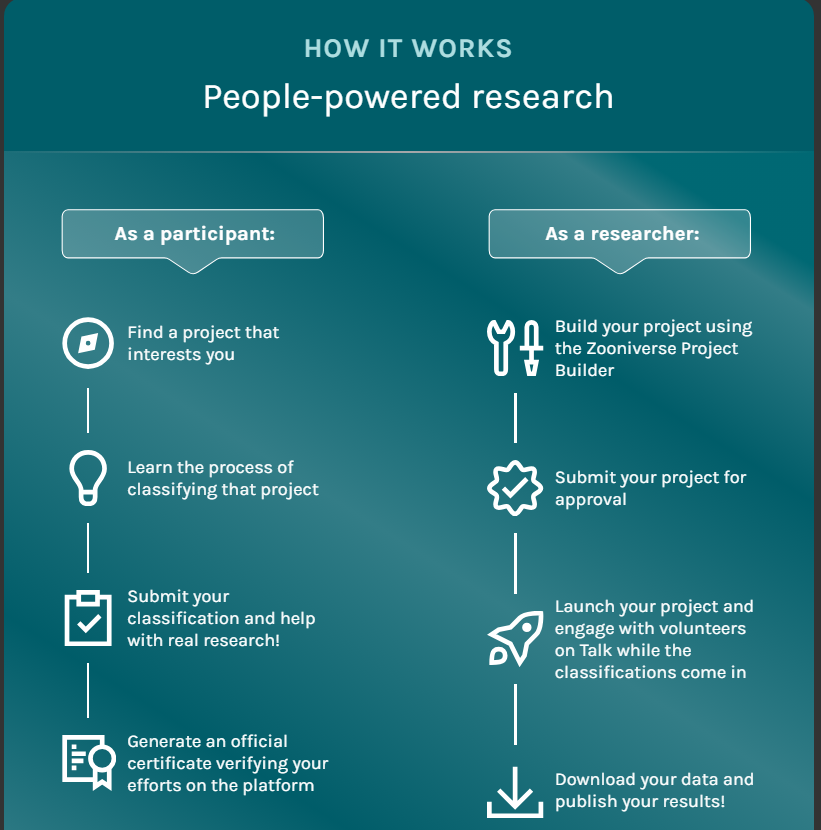
(Zooniverse, 2019)
This report is a reflection on my experience with Zooniverse, broken down into the process of using the website, the significance of my work, the insights gained from this project, and the application of this initiative to the broader Digital Humanities field.
The Process
Initially, I was looking for something on Zooniverse that aligned with my humanities minor field of Philosophy, but was saddened to find no appropriate project of that category, so I instead turned to highlighting projects that piqued my personal interests. I found a fascinating project known as “Dark Energy Explorers”, set on “identify[ing] distant galaxies to help measure dark energy when the universe was just ~2-3 billion years old”. (www.zooniverse.org, n.d.).
I was enraptured by the notion of space and dark matter and energy as a child and am quite a fan of the subject to this day, so I personally had no option but to work on this project. After joining the endeavour, I was introduced to a series of instructions that detailed how a galaxy could be discovered by using spectral lines, keen human eyes, and pattern matching. I was given a reference on what the different galaxies look like, what an error could appear as, and even how to identify black holes, which was quite enthralling. 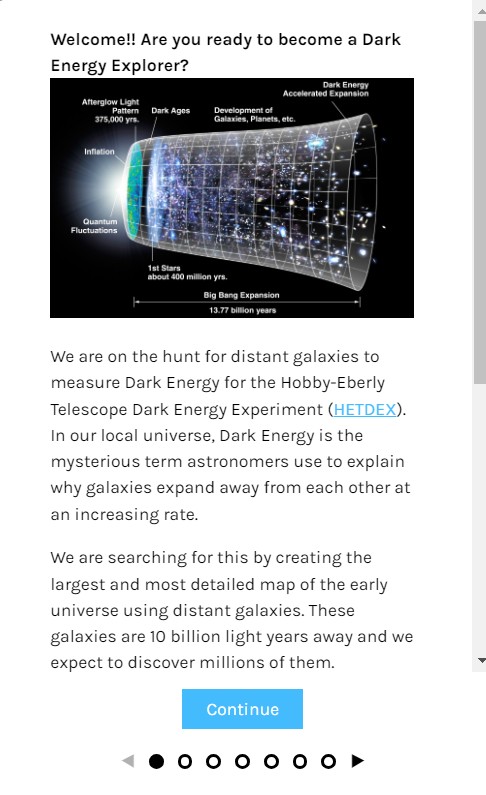
I was intimidated by the initial complexity of the task, but remained calm and kept referring to the tutorial and guide to make progress.
As I performed more tasks, my confidence in identifying galaxies increased and I was even lucky enough to find two potential black holes. I did however notice my complacency when doing many tasks in succession so I learned to pace myself to refresh my perspective. This was a challenge, as I had to balance my growing confidence with apprehension. 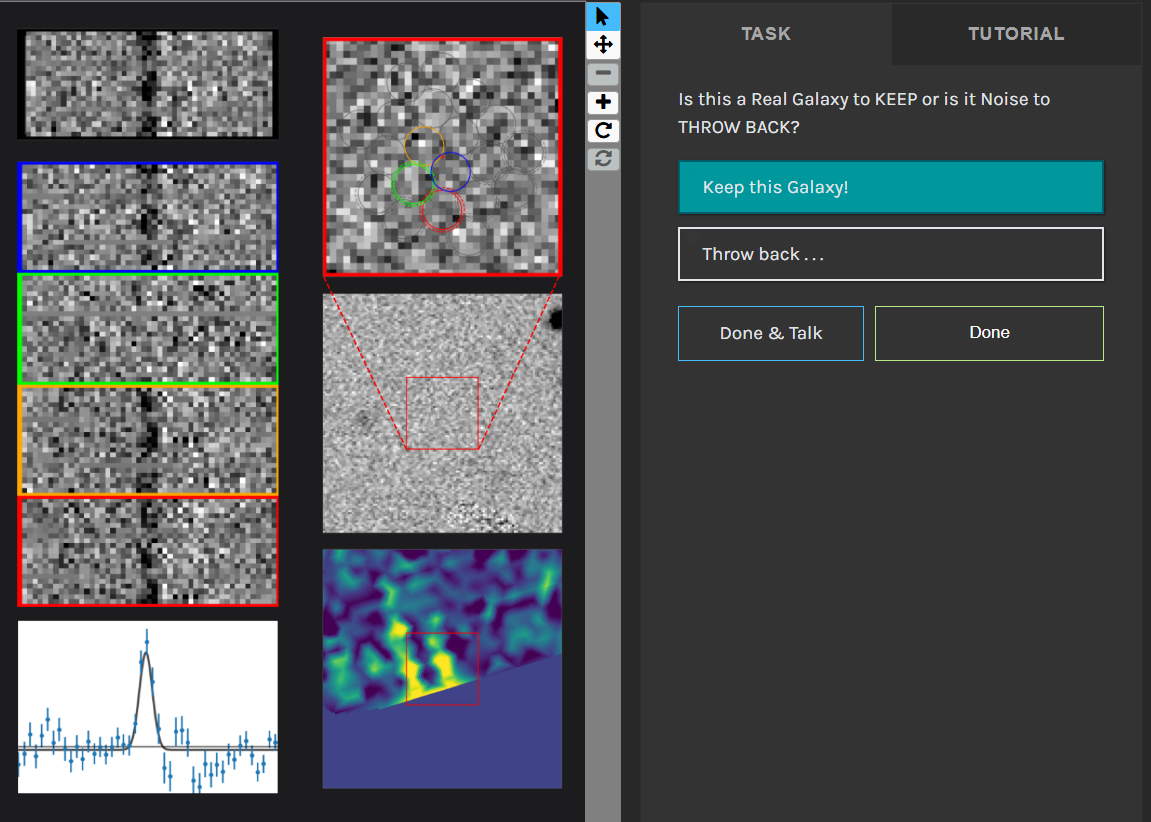
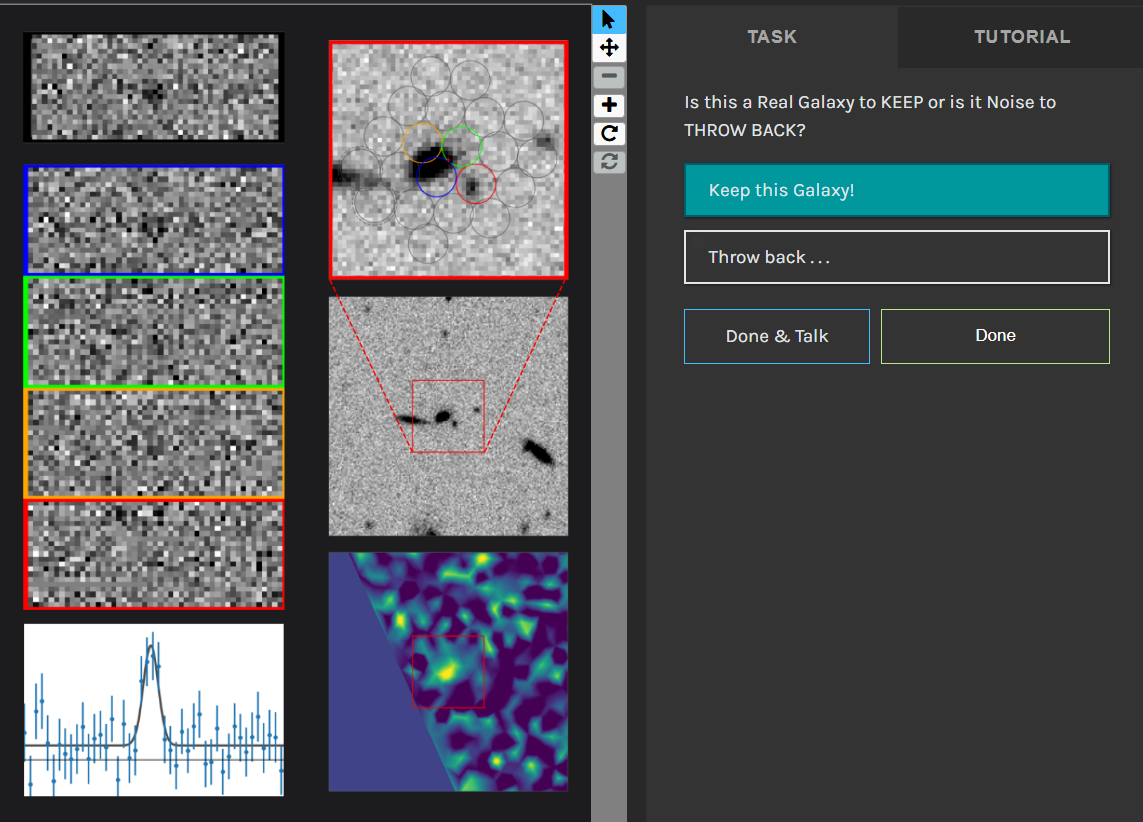
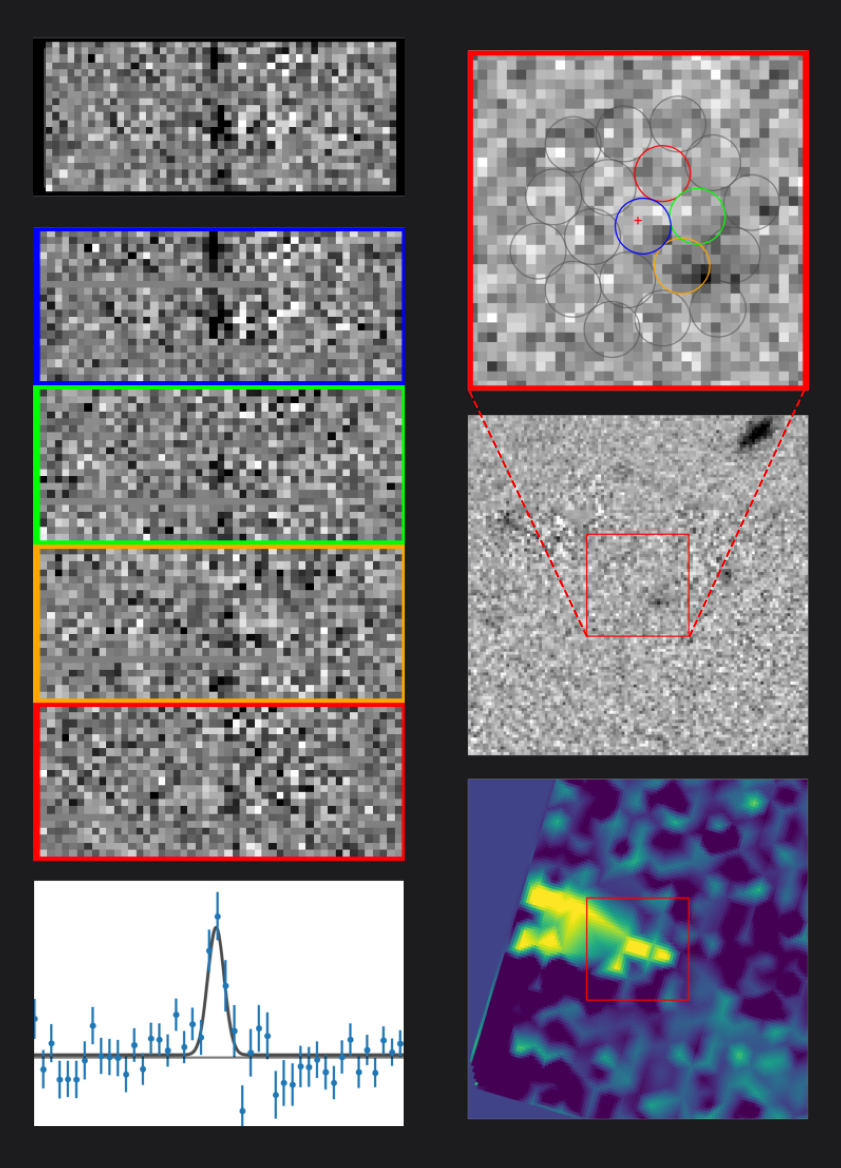
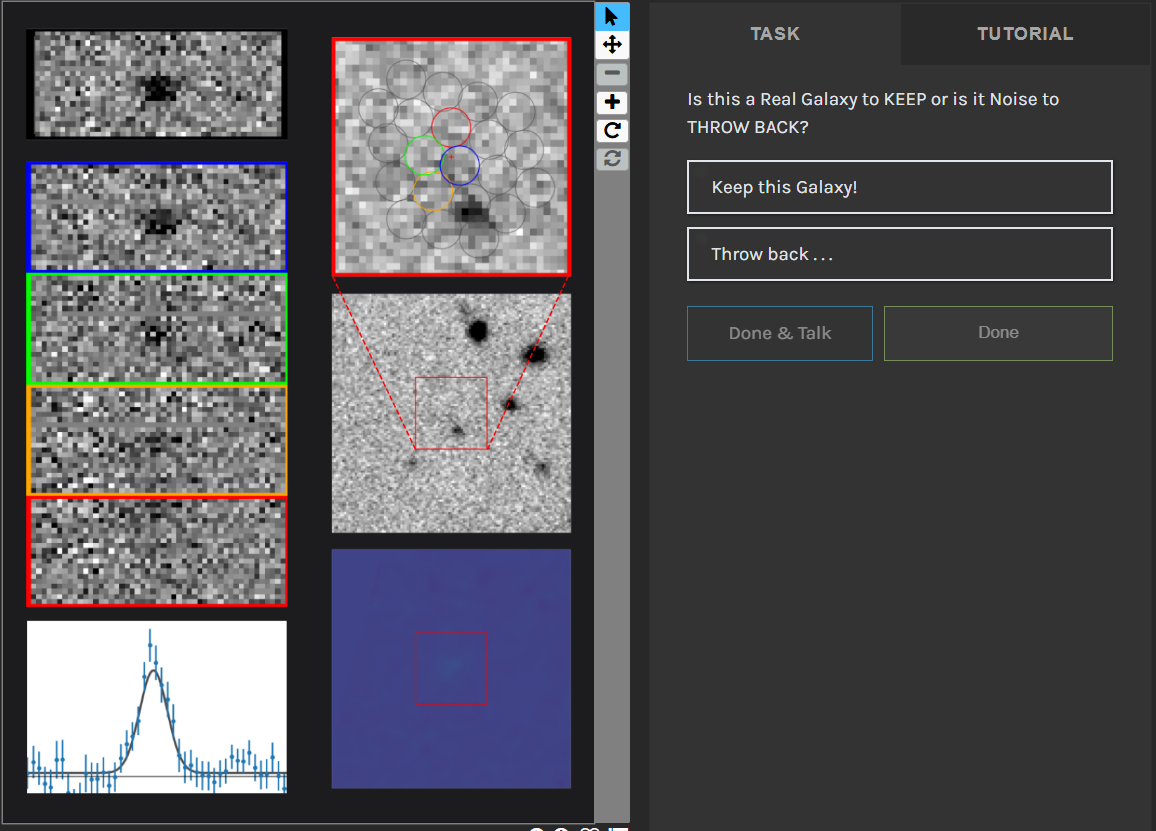
By my 50th task, I had a solid understanding of what was considered a galaxy, but even then I was evolving my standards and perception to advance my skills in identification.
By my 100th task, I had understood that I was perhaps too hasty in many of my observations, so I aimed to become as precise as possible and take my time with each image and graph. I had started to feel a commitment to doing the job well not just for myself but for my fellow explorers. I had even begun discussing the images with them, asking questions and making my own unique observations, such as being the first person to find a black hole in an image. 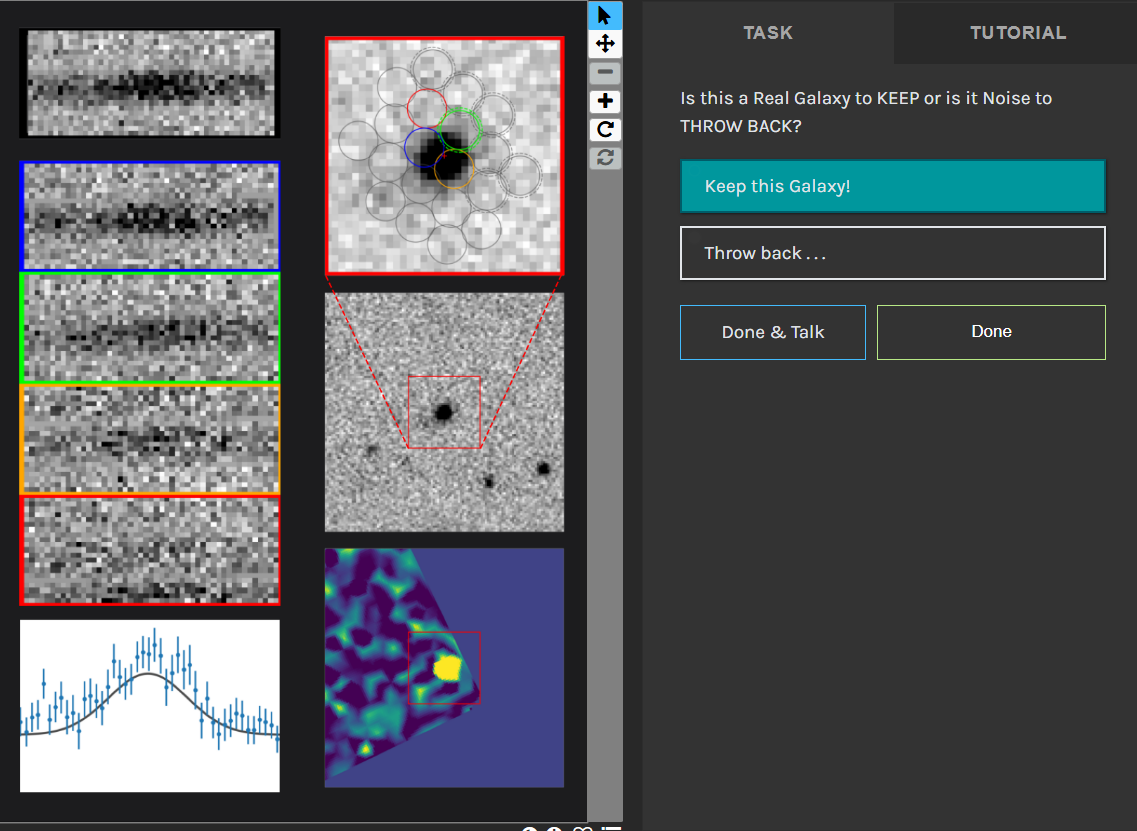
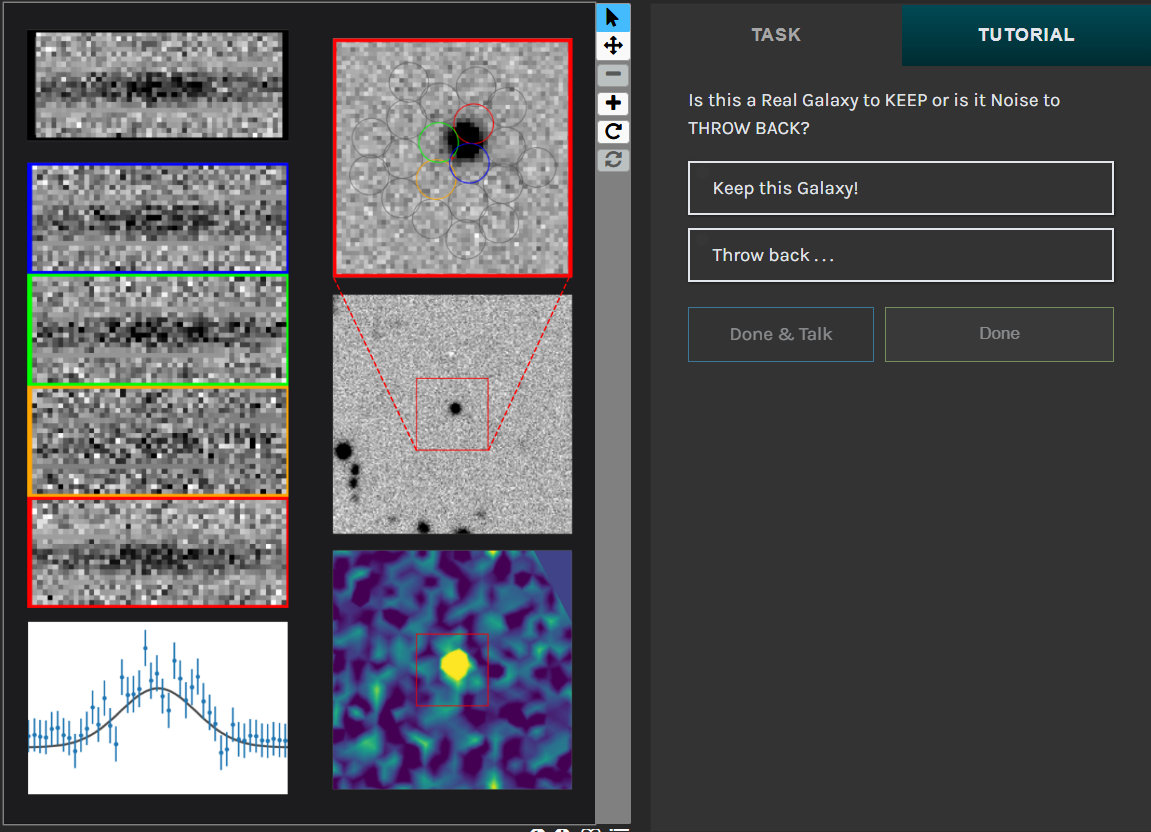
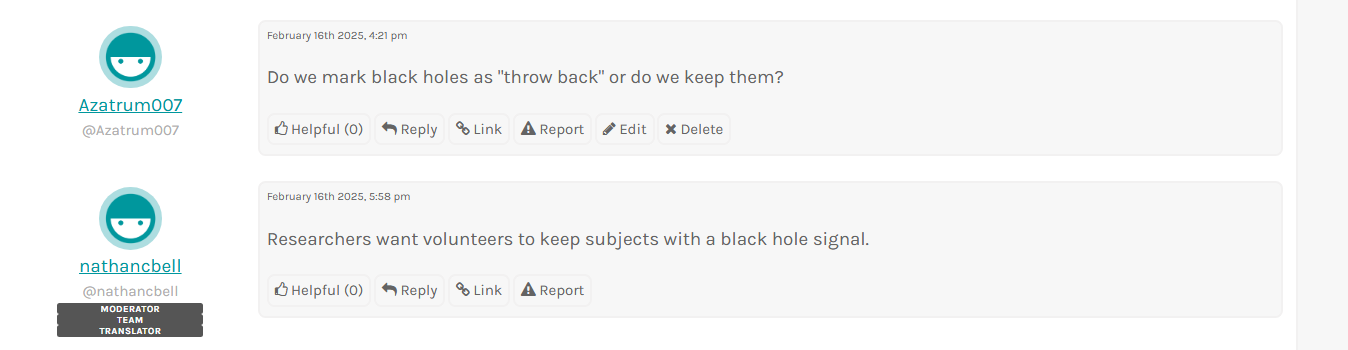
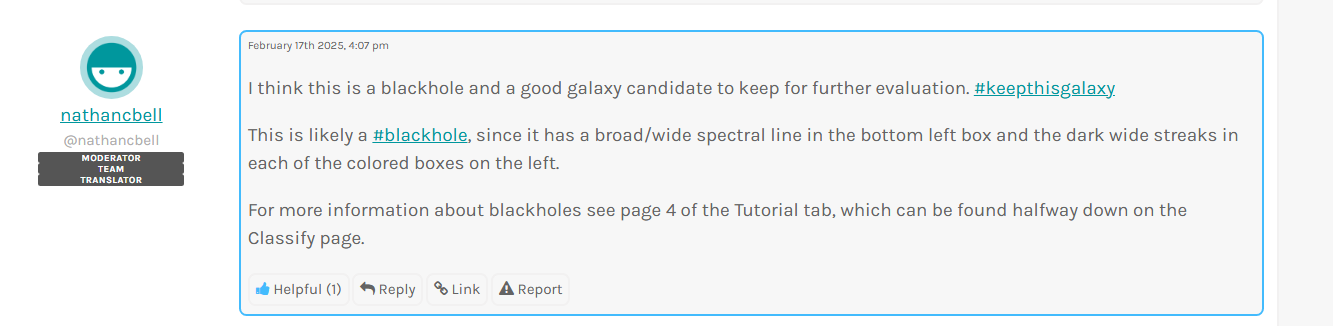
(www.zooniverse.org, n.d.).
Implications of My Contribution
My contribution to this project is simple: data analysis. I am filtering good data from bad data. I am, alongside a cohort of like-minded and enthusiastic individuals, using my eyes and pattern-matching skills to investigate the images presented to me and determining whether there may be something of note to the researchers in the given position in space and time. In this, my 257 tasks have allowed a great deal of research to this endeavour. My data will be used and reviewed and in turn be sent for machine learning and mathematical analysis.
“During five years of observations, the Hobby-Eberly Dark Energy Experiment (HETDEX) will find over one million galaxies that are 9 billion to 11 billion light-years away, yielding the largest map of the universe ever produced. The map will allow HETDEX astronomers to measure how fast the universe was expanding at different times in its history. Changes in the expansion rate will reveal the role of dark energy at different epochs. Various explanations for dark energy predict different changes in the expansion rate, so by providing exact measurements of the expansion, the HETDEX map will eliminate some of the competing ideas.”
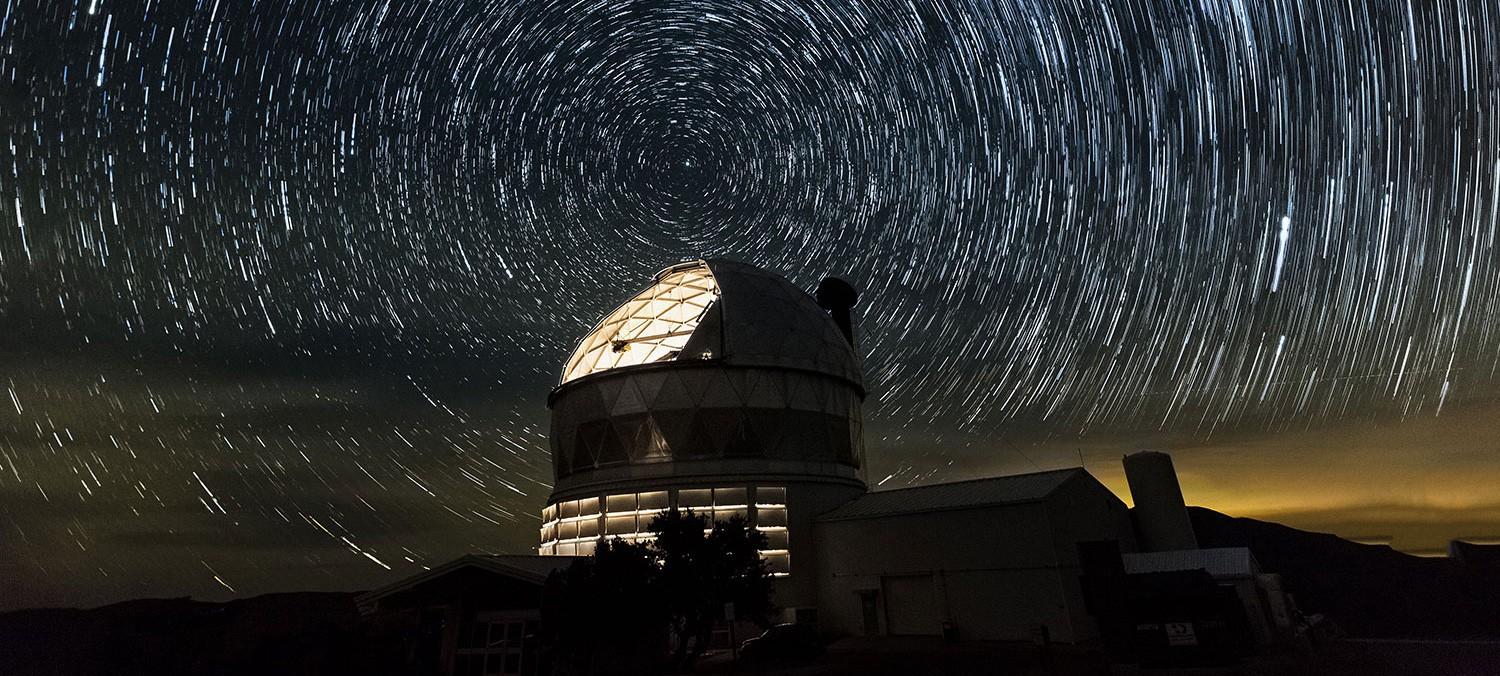
(www.zooniverse.org, n.d.).
From my personal understanding of the significance of a project like this, especially after becoming a part of the work, I must first admit that there is a growing cynicism of research like this. People seem jaded by astronomical sciences and its sister fields: “Why does this matter? We should focus on what’s happening down here!” While I understand that, especially in times as socially and economically uncertain as these, I refer to an excerpt found in Astronomy in Everyday Life: “In the past, astronomy has been used to measure time, mark the seasons, and navigate the vast oceans. As one of the oldest sciences, astronomy is part of every culture’s history and roots. It inspires us with beautiful images and promises answers to the big questions. It acts as a window into the immense size and complexity of space, putting Earth into perspective and promoting global citizenship and pride in our home planet.” (Rosenberg, 2014) The paper goes on to detail why astronomy is so important for us – from technological advancement and international collaboration, to cultural ideology and modern symbolism.
Modern astronomers, to this day, still face the daunting task of trying to explain many of the unknown variables that superintend the universe. The researchers of this project have commented on this Herculean effort: “With dark energy we know nothing. It may not be dark and it may not be energy. It’s the phrase we use to explain our ignorance.” By observing exploding stars – supernovae, studying the rippling sound waves after the Big Bang, and analysing the shapes of thousands of galaxies, the astronomers at HETDEX inch closer and closer to understanding the underlying axioms of the universe. Is that not important enough to warrant attention? To give energy and time so that one day, we may understand where we came from, from a scientific perspective?
The crowdsourcing aspect of this project is refined and maintained proficiently. I did not feel any pressure to perform well, nor was I received by any negativity when interacting with the community. Volunteers are given apt explanations and the moderation team can easily be contacted.
What I Learned
I did not begin this project expecting to be blown away by what I found. However, I was thankfully proven wrong, mainly as a result of my chosen Zooniverse project. I improved my data analysis skills quite extensively in the nine hours that I was completing tasks. I learned a great deal about precision – as even the most miniscule of pixels could be the difference between useless noise and an entire galaxy. I was forced to confront my need to rush a task, as patience and engagement were the tenets of this work.
My personal interest in the topic forced me to engage and excel in the endeavour, which taught me much about the effort I put into an academic project when it is something I am passionate about. I felt a sense of accomplishment from my efforts and am in fact delighted with the fact that I had ever even found a black hole’s signals, let alone for two. The first time I realised that I had witnessed an actual black hole, billions of light years away, it was incredibly mesmerising. I was studying the data of a literal universal apotheosis, all while sitting in my bedroom. This enthusiasm that I felt was shared by the other researchers who had discussed this specific set of signals, who also seemed ecstatic about the discovery.
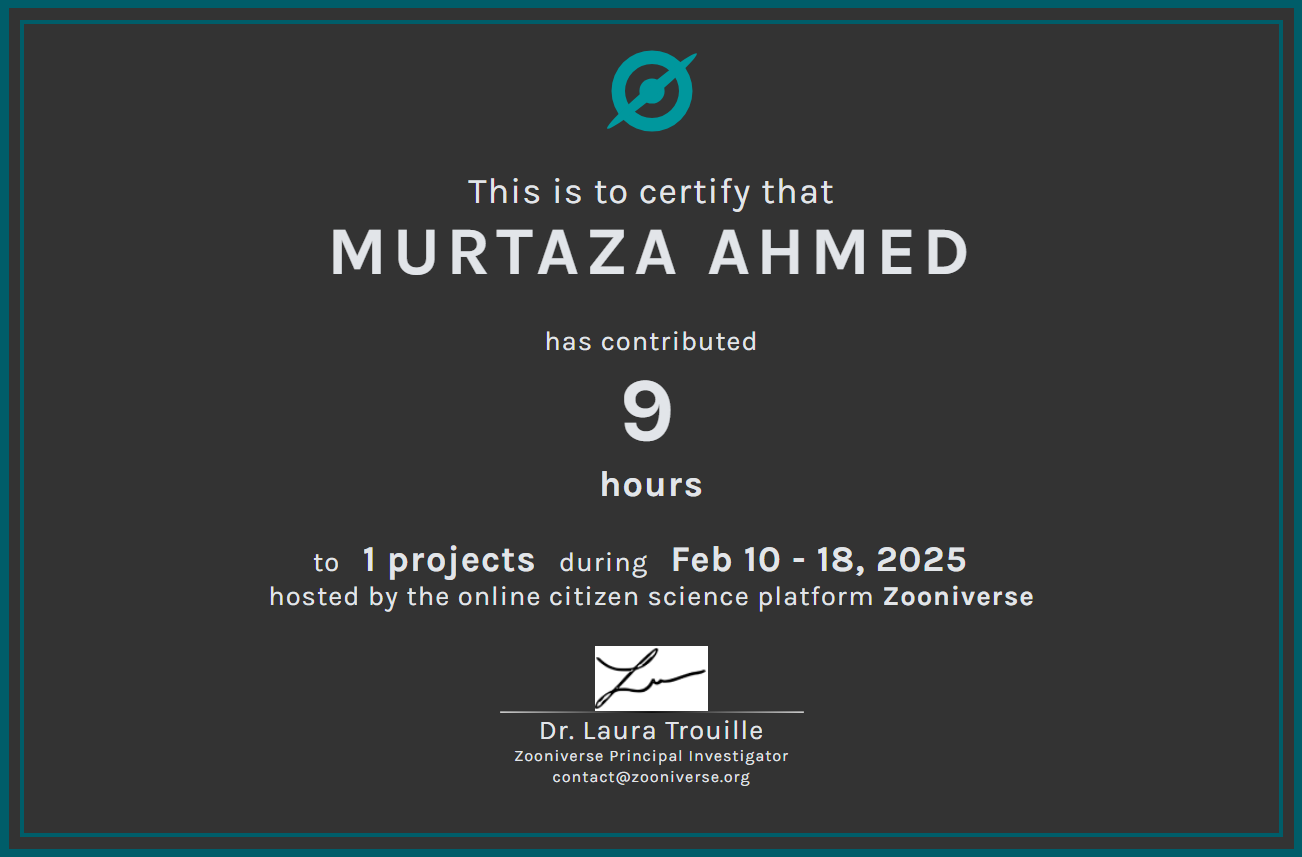
I had experience with crowdsourcing from tools such as OpenStreetMaps, but Zooniverse was a much broader catalogue of content. I was pleasantly surprised by the quaint format of the tasks themselves, neatly packed into a box with options to zoom and pan across the images. I have not tried the mobile app version, yet I can imagine it allows quite a dynamic user experience with the touch controls available. Regardless, the UI was well designed and I didn’t have any issues with the website itself.
I had a new perspective on the kind of research that could be performed by Digital Humanities scholars. It was previously a foreign concept to me that we could reach out into the vastness of space, academically speaking. It makes sense in retrospect, as technology is a vital aspect of astronomy and space exploration, which in turn can be studied by a Digital Humanities scholar. I have always joked to colleagues that this line of work – digital humanities – is the “swiss knife” of academia, in the sense that it can really be applied to nearly any field of study and it makes sense to some extent.
Application to My Own Work
In my research for this project, and in an effort to find the connection between astronomy and the Digital Humanities, I discovered Modeling the Cosmos by Ido Yavetz and Luca Beisel, a Digital Humanities project with the aim “to provide the Computational History of Astronomy with a novel platform to reconstruct astronomic models from the historical accounts.”
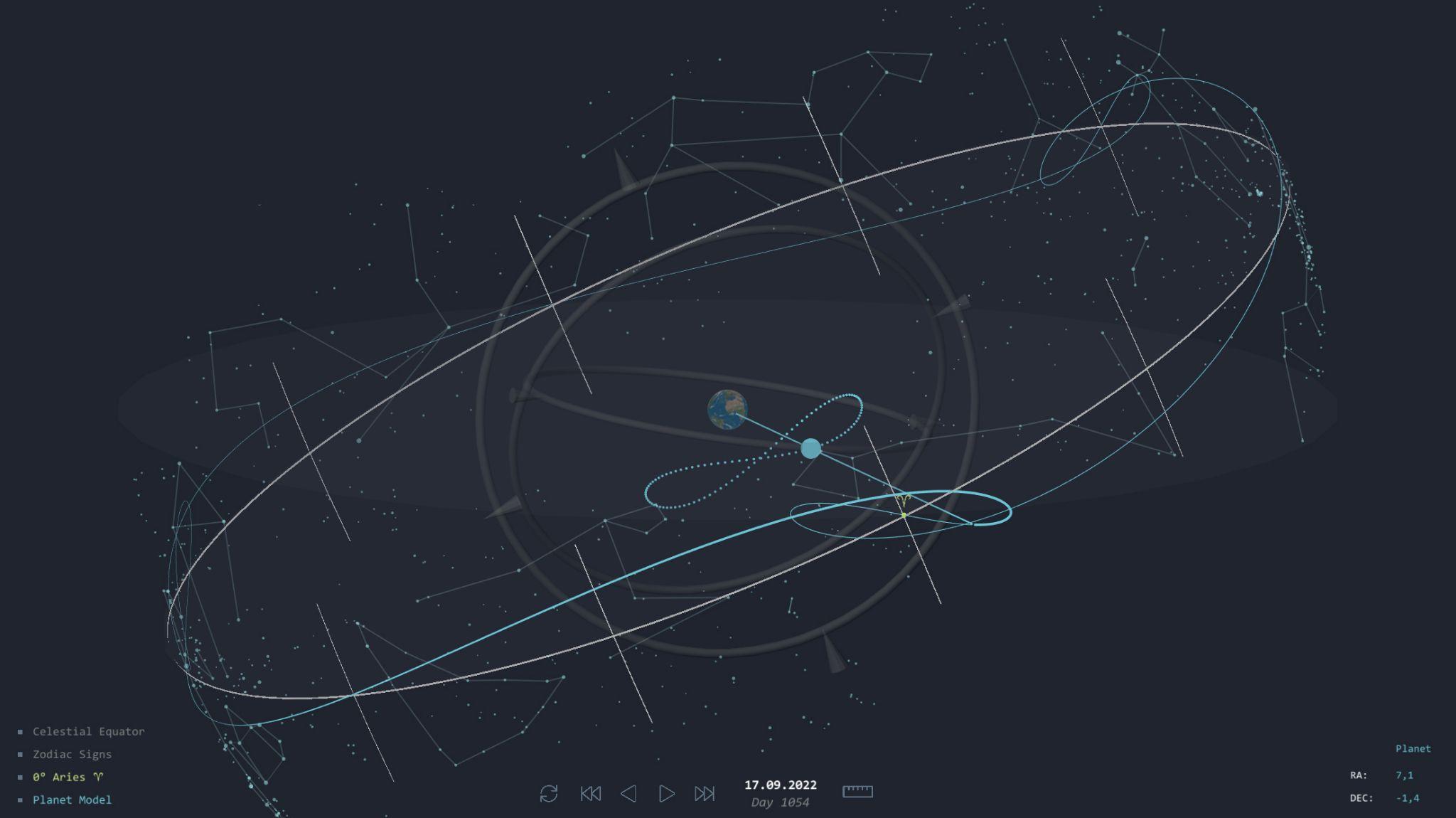
(Beisel, 2017)
This is a prime example of how the Digital Humanities can be implemented into astronomical studies. Visualisation and data modelling are key aspects of DH, and astronomy has its own history and philosophy that can be tapped into to evaluate. Digital archiving is a necessary component in the politics of space exploration, particularly for well established groups such as NASA, and it has already proven itself to be important through projects such as the Astronomical Diaries Digital, a project that edits and analyses the so called “Astronomical Diaries”, a group of Late Babylonian observational records dating between ca. 400 and 60 BCE.” (Oeaw.ac.at, 2022) This also demonstrates an audience for digitisation in these spaces, where physical media must be captured and modelled and interpreted into a digital format, which comes with its own difficulties, and which would require the expertise of a Digital Humanities scholar.
I could definitely see myself working alongside projects like these in the future, through more concise data analysis, visualisation and modelling, or digitisation and archiving. Moreover, AI systems and machine learning programmes have already been established in works such as these, so it is up to Digital Humanists to manage and develop these technologies with sustainability, ethical thinking, and innovation in mind.
Another example of astronomy in the context of DH is EIDA, “which aims at developing a new critique of astronomical diagrams of the 8th-18th centuries found in Chinese, Sanskrit, Persian/Arabic, Greek, Hebrew and Latin sources. This new critique is framed in the context of the digital humanities and will include an information system allowing to construct natively digital critical editions of diagrams.” (EIDA, 2025) Astronomy’s history is vast and diverse, and its future is promising and expanding. It is no surprise that DH scholars are so adamant on working on this sector.
For my final year project in the BA Digital Humanities and Information Technology undergraduate course, I may consider this field of science to work with, as there is much potential in working with astronomers and space exploration. I am looking forward to taking what I have learned from my experiences here on Zooniverse and applying them to future projects or even to my personal life. Often the most important lessons we learn in life come when we are not expecting them, and there is much to find in the finer details of one’s work when given the chance to magnify it.
Conclusion
Research is the crux of advancement in academia. Often, we cannot go forward without looking back, and scholars of the Digital Humanities are especially aware of this principle, as we find ourselves constantly reflecting on previous works to advance our understanding of our given field of expertise and the world around us. What a crowdsourcing tool such as Zooniverse offers is a more streamlined, accessible domain, in which users of any field can collaborate with one another to further their goals and knowledge. This collective effort inspires creative thinking, discussion, and documentation. The works of this application are important, engaging, and innovative in their execution. I found a great deal of learning and enjoyment from this project, and hope to use it even beyond this module.
References
- EIDA. (2025). Home. [online] Available at: https://eida.hypotheses.org/ [Accessed 19 Feb. 2025].
- hetdex.org. (n.d.). HETDEX – Hobby-Eberly Telescope Dark Energy Experiment. [online] Available at: https://hetdex.org/.
- Lucabeisel.de. (2017). Modeling the Cosmos – Digital Research Environment for the History of Ancient Astronomy |. [online] Available at: https://lucabeisel.de/ancient-astronomy/ [Accessed 18 Feb. 2025].
- Oeaw.ac.at. (2022). ADD – Astronomical Diaries Digital. [online] Available at: https://www.oeaw.ac.at/acdh/research/dh-research-infrastructure/activities/data-processing-analysis/add [Accessed 18 Feb. 2025].
- Rosenberg, M. (2014). Astronomy in Everyday Life. Capjournal. [online] Available at: https://www.capjournal.org/issues/14/14_30.pdf.
- www.zooniverse.org. (n.d.). Zooniverse. [online] Available at: https://www.zooniverse.org/projects/erinmc/dark-energy-explorers/about/research.
- Zooniverse (2019). Zooniverse. [online] Zooniverse.org. Available at: https://www.zooniverse.org/.
One thought on “Stargazing: Exploring Space in the name of Digital Humanities”