
The following essay was written by me as part of a homework assignment in 6th Year. I thought it was quite an engaging read so I wanted to share it. I will reflect on my work after displaying it, as I have since developed my thinking for this topic. For that reason, I will post the unedited version despite any flaws with the writing.
Music and songs have been, without a shadow of a doubt, some of the greatest forms of expression of the human conscience. As someone who listens to so much music, my hearing has suffered for it, and as someone whose palette is as extensive as possible, writing this brings me joy. We don’t talk about the impact of music in our society enough. I live and breathe through the scope of music, and it has shaped my perspective on life.
“In the dark times, will there also be singing? Yes, there will be singing. About the dark times.” Throughout history, music has been used by humans to show our indomitable spirit. There has been a song made to cope for every problem imaginable, and we can listen to those songs to not only appreciate the artist’s vision, but to find our own meaning in the music. Whether it be from the lyrics, tone, or even just the context by which the song originates from, there is a story, intentional or otherwise, to be told.

One of my favourite stories in a song is “Father Time” by Kendrick Lamar. I strongly suggest listening to the song and reading the lyrics. Kendrick speaks about his father and how his “daddy issues” shaped his behaviour in later life. It’s a very pitiable song. Kendrick elaborates on how his father taught him that “men should never feelings”, and that effect on his mental wellbeing in adult life. This makes me think about how I was raised and my own father, and that while he isn’t perfect, he’s only human. Kendrick’s story gives you an opportunity to reflect on your own experiences, as all great artworks should.
Music can also be a tether to our own emotions and memories through association. When I think of someone with whom I’ve lost contact, I’ll remember the songs they introduced me to. That amplifies the song because it is linked with a person, and it changes what a song means to you. I remember the music that helped me cope during my darkest moments, and often when listening to music I think of what moments in my life match the song’s aesthetic. We give songs another story to tell by our own volition. Sometimes, the stories in a song can clash tonally with the story we assign it. The song “Blondie” by Current Joys is tonally a very sad sounding song, yet every time I listen to it, I’m reminded that I overcame the previous hardships I faced when this song was first discovered.

Music is also a powerful tool for storytelling because of how free it is in its expression. You can tell a story through a painting from its colours and what’s being painted, and music is similar in that aspect. A good song to explore this concept with is “Sisyphus” by Quadeca. This song is about the mountains that we all have to endlessly climb in our own psyches and how it sometimes it feels impossible to make any progress, hence the name “Sisyphus”, like in Greek mythology. The lyrics in the song perfectly encapsulate the metaphor that Quadeca – whose real name is Ben Lasky – uses to tell the story of his mind and how it affects his relationship with his lover.
“I been in Sisyphus mode, looking up the path of a tall mountain // And I keep getting stuck in these Potholes // Maybe I should just let the rock roll // I’ve been so close to the peak I know // But I’m tryna stay away from the drop, though”. This is the most obvious example of the analogy used in the song. It’s executed superbly and the idea of us being Sisyphus in our own minds in an endless conquest is fascinating. Can we make it to the top? Is a life of constant struggle really worth it? The comparison is an excellent tool for philosophy because of how freely it can be moulded. What is the rock that we are pushing in our lives? All of this is inferred simply from the lyrics.
The sounds in the song are harmonic and angelic, but at other times sharp and overwhelming. What I really find compelling is that these sounds swap their traditional roles in media. The choir vocals and harps are during the bleak moments of the song. During the end, there is an explosion of dark noise that can overwhelm you, but that’s when Ben sings about how “somehow [he will] get [himself] past here”, showing hope and bold triumph in the face of an endless adversity. Even if the walk up the mountain is fierce, one day he’ll be free to walk his own path. Even if it’s a long and painful journey.
“I love my father for telling me to take off the gloves, cause everything he didn’t want was everything I was.” For Kendrick Lamar, making “Father Time” must have been very emotionally exhausting. The cost of great art has always been steep. But what is art, if not humans trying to understand themselves? Each artwork, whether it was the artist’s intentions or not, tells us something about ourselves. “Father Time” gives me an opportunity to step outside my personal biases and reconsider if the people in my life have always been positive influences on me. “Sisyphus” questions my path in life, and reminds me that sometimes we can seem lost and hopeless, even if we know where we’re going.
“Blondie” reminds me of all the people who I still care for no matter how they treat me. “There are flowers in my heart // They’re growing thorns and it hurts // Every time // You’re around.” The sounds in the song are so inherently sad, you can almost imagine a scene from a movie where a character has just been told the worst news in their life and now has to walk home. The vocals are that of a desolate man, who just sounds so exhausted. I empathise with the characters in these songs heavily.
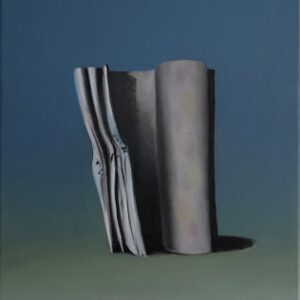
I don’t think I could ever write anything about the stories in our music without mentioning “Everywhere At The End Of Time” by The Caretaker. “Everywhere At The End of Time was a series exploring dementia, its advancement, and its totality.” This is a quote written by The Caretaker himself. I’ll be honest, I’m listening to the beginning right now, and I am heartbroken. I know what is to come with this masterpiece. “Everywhere At The End Of Time” is a six-and-a-half-hour long journey into empathically exploring the life and gradual decline of someone recently diagnosed with Alzheimer’s disease. If you take one piece of information from this article, let it be my plea for everyone to at least attempt to listen to this at least once in their lifetime.
“Everywhere At The End Of Time” is divided into stages and acts, akin to the stages of Alzheimer’s. Stage one is pleasant and fluffy, but something feels wrong about it. The crackle, the elongated loops of music, it’s vexing. “Here we experience the first signs of memory loss. This stage is most like a beautiful daydream. The glory of old age and recollection. The last of the great days.”
Stage two continues as such with a slight degradation in the quality. It’s eerie and haunting. It makes me feel like I’m standing in the middle of a ghost town. By stage three, songs muffle and reverberate even more. The music itself feels confused and in pain. As stages four and five kick in, that pain and confusion has made itself a home in the jittery, chaotic messes of sound. It’s like crossing an event horizon, and realising it too late.
Stage six is the finality of the condition. A numbing nothingness encompasses your ears. The regression is mortifying. It’s an abyss. What once remained of a golden age, now a shallow husk. It is tragedy incarnate. These diseases decay you and chip away at your very being, until nothing is left. I don’t think a piece of art has terrified me more. To live out a whole fulfilling life and by the end you haven’t lived a single day. Each seemingly insignificant noise is intentionally chosen to convey the meaning of the song. It’s incredible. “Everywhere At The End Of Time” is unequivocally the greatest example of how music can tell an impactful story.
The lessons we learn from art, and music especially, are invaluable, “Not everyone can be an artist, but an artist can come from anywhere.” I don’t know how I could ever live in a world without music. The music in my life has shaped me to be who I am. Whether it comes from the message I take from any song, how a song is a key to any memory, or how a song tells us a story from even its most miniscule details, I’m grateful to have music in life. It’s brought so many people together in union over their passion of their favourite songs and artists. No matter where you’re from or your culture, music in some form exists. “That’s one of the great things about music. You can sing a song to 85,000 people and they’ll sing it back for 85,000 different reasons.”
I still enjoy reading this piece months after writing it. I acknowledge some of the awkwardness with diction, for example, in the beginning when I say “cope for” as opposed to cope with. There are questionable grammar choices throughout the essay. It isn’t enough to take a reader out of the reading experience but it’s noticeable at a second glance. I think the songs I wrote about were great for the key points I was making. I would like to know what songs people think of when they read this article. By all means, feel free to share your thoughts and also what songs you were reminded of in the discussion section.
One thought on “Music In Our Lives”